Gold jewellery is a valuable asset for many families in Kerala. When you plan to sell unused, damaged, or outdated ornaments, understanding cash on gold is important because the amount you receive depends largely on purity, net weight, and the current gold rate. A 22K chain, an 18K diamond ring, and a 14K modern bracelet may look similar, but they contain different amounts of pure gold and are valued differently.
This guide explains the difference between 22K, 18K, and 14K jewellery, how purity affects valuation, and what Kerala customers should check before selling gold.
What Does Gold Purity Mean?
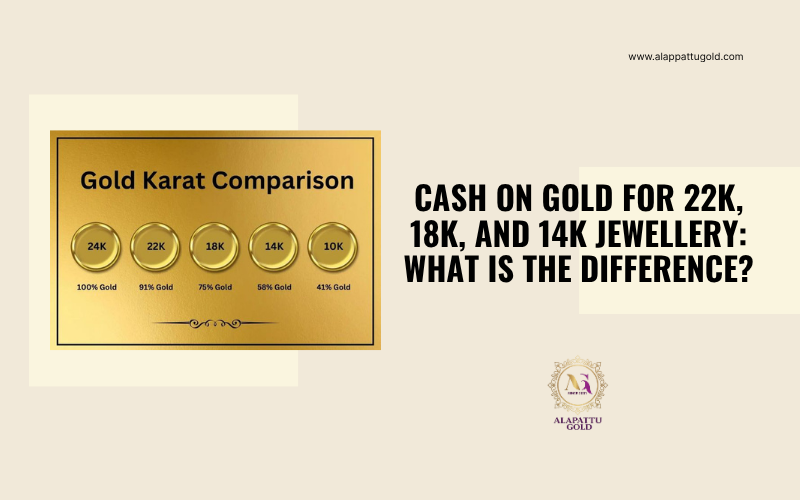
Gold purity refers to the amount of actual gold present in an ornament. Pure gold is classified as 24 karat, or 24K, and contains approximately 99.9% gold. However, pure gold is soft and can bend or scratch easily. Jewellery manufacturers mix gold with other metals such as silver, copper, zinc, or palladium to improve strength and durability.
The karat number indicates how much gold is present out of 24 parts.
For example:
- 22K gold contains approximately 22 parts gold out of 24.
- 18K gold contains 18 parts gold out of 24.
- 14K gold contains 14 parts gold out of 24.
The amount of Cash on gold you may receive is therefore influenced directly by the karat level of your jewellery.
22K Gold Jewellery
22K gold contains approximately 91.6% pure gold. It is commonly used for traditional jewellery in Kerala and across India.
Common examples of 22K jewellery
- Chains
- Bangles
- Traditional necklaces
- Wedding jewellery
- Rings
- Earrings
- Pendants
- Temple-style ornaments
22K jewellery has a high gold content while retaining enough strength for regular use. Many Kerala families purchase 22K ornaments for weddings, festivals, gifts, and long-term savings.
How 22K jewellery is valued
Suppose a plain 22K chain weighs 20 grams. If the entire item is gold and there are no stones or other materials, the buyer may use approximately 20 grams as the net gold weight. The purity factor, current rate, and buyer’s valuation policy are then applied.
If the chain includes a non-gold clasp, beads, or other components, the net gold weight may be slightly lower than the gross weight.
For customers selling traditional ornaments, 22K jewellery will generally have a higher value per gram than 18K or 14K jewellery of the same weight, assuming similar conditions.
18K Gold Jewellery
18K gold contains approximately 75% pure gold. The remaining 25% consists of other metals that make the jewellery harder and more suitable for detailed or contemporary designs.
18K gold is widely used in:
- Diamond rings
- Gemstone jewellery
- White-gold ornaments
- Rose-gold designs
- Lightweight contemporary jewellery
- Fashion and branded jewellery
Because it contains more alloy metal than 22K gold, 18K jewellery is often more durable for designs that hold stones or require intricate settings.
Example of 18K valuation
Imagine an 18K ring weighing 8 grams. It contains 0.5 grams of stones and settings, leaving an estimated net metal weight of 7.5 grams. The buyer then evaluates the purity and calculates the value based on 18K gold.
A customer should not compare the ring’s value directly with the price of an 8-gram 22K ring. The gold content is different, so the final Cash on gold amount will also differ.
14K Gold Jewellery
14K gold contains approximately 58.5% pure gold. It is stronger and more resistant to wear than higher-purity jewellery because it contains a greater proportion of alloy metals.
14K jewellery is commonly found in:
- Modern imported designs
- Lightweight bracelets
- Daily-wear rings
- Contemporary chains
- Fashion jewellery
- Some white-gold and rose-gold products
Some customers may be unfamiliar with 14K jewellery because 22K gold is more common in traditional Kerala ornaments. Therefore, checking the hallmark or obtaining professional testing is important.
The Cash on gold value of a 14K item will generally be lower than that of a 22K item with the same net weight. This is because the 14K ornament contains less pure gold.
22K vs 18K vs 14K: Quick Comparison
| Feature | 22K Gold | 18K Gold | 14K Gold |
| Approximate gold content | 91.6% | 75% | 58.5% |
| Common use | Traditional jewellery | Diamond and modern jewellery | Lightweight and imported designs |
| Durability | High, but softer than lower karats | Strong | Very strong |
| Gold value per gram | Generally higher | Moderate | Generally lower |
| Common in Kerala | Very common | Increasingly popular | Less common |
This table provides a general comparison. The actual value of an ornament also depends on its net weight, testing result, stones, condition, and the rate used by the buyer.
How Purity Affects Gold Value
When estimating Cash on gold, the basic principle is that a higher-purity item contains more pure gold. However, the complete calculation should include net gold weight and the relevant market rate.
Simple illustration
Assume three ornaments each have a net weight of 10 grams:
- 22K ornament: 10 × 0.916 = 9.16 grams of pure gold
- 18K ornament: 10 × 0.750 = 7.50 grams of pure gold
- 14K ornament: 10 × 0.585 = 5.85 grams of pure gold
Although all three ornaments weigh 10 grams, they do not contain the same quantity of pure gold. This difference affects the final offer.
When estimating Cash on gold, customers should avoid multiplying the total weight by a 24K rate without adjusting for purity.
Gross Weight and Net Weight
Gold jewellery may contain stones, beads, lac, enamel, thread, springs, hooks, and other materials. The total weight of the item is called gross weight. The weight used for gold valuation after excluding non-gold components is called net gold weight.
For example:
- Gross weight of necklace: 30 grams
- Stones and decorative materials: 3 grams
- Estimated net gold weight: 27 grams
The buyer may then test the 27 grams for purity. If the ornament is 18K, it will be valued differently from a 27-gram 22K necklace.
A fair Cash on gold evaluation should clearly explain how gross weight, non-gold weight, and net gold weight were determined.
Why Professional Purity Testing Matters
A hallmark or karat stamp can provide useful information, but it should not always be treated as the only proof of purity. Jewellery may have been repaired, resized, soldered, or modified over time. Some ornaments may also contain replacement parts made from different metals.
Professional testing helps determine the actual purity of the item. Ask the buyer:
- What testing method is being used?
- What purity result was found?
- Is the test applied to the entire item?
- How does the result affect the final calculation?
When comparing Cash on gold offers, a clear testing process is more important than an attractive advertisement.
How to Get a Fair Value for Different Karat Jewellery
Before selling, check the approximate gold rate for the day. Then ask the buyer to provide a clear calculation based on:
- Purity
- Net gold weight
- Applicable rate
- Stones and non-gold components
- Any deductions
- Payment method
If you are comparing Cash on gold offers, make sure each buyer is using similar information. Comparing only the advertised per-gram rate can be misleading if one buyer applies different deductions or calculates weight differently.
Before accepting Cash on gold, review the valuation carefully and ask questions about anything you do not understand.
Documents You May Need
Requirements can vary depending on the buyer and transaction value. It is useful to carry:
- Government-issued photo ID
- PAN card, where applicable
- Original purchase bill, if available
- Address details
- Bank account details for digital payment
- Ownership documents, if the jewellery is inherited
An original bill may help confirm the jewellery’s background, but it may not always be mandatory. Contact the buyer before visiting to confirm the required documents.
Safe Selling Tips for Kerala Customers
Choose a buyer with a clear physical location, professional staff, visible weighing equipment, and transparent communication. Do not feel pressured to sell immediately.
Ask for a receipt and confirm payment before leaving. If you have diamond jewellery, antique ornaments, or valuable gemstones, consider whether a separate appraisal is appropriate.
For information about old gold buying services, . You can also contact Alappattu Gold on WhatsApp to discuss your requirements.
For a broader overview, read the Cash on Gold in Kerala: The Complete Guide to Selling Old Gold Safely and Getting the Best Value.
Conclusion
22K, 18K, and 14K jewellery differ mainly in their pure-gold content. 22K jewellery contains approximately 91.6% gold, 18K jewellery contains about 75%, and 14K jewellery contains around 58.5%. As purity decreases, the amount of pure gold in the same weight also decreases.
When selling jewellery, do not focus only on the karat marking. Check the net gold weight, current rate, stone deductions, testing method, payment process, and buyer reputation. A transparent valuation will help you understand exactly how the offer was calculated.
Whether you own traditional 22K jewellery, an 18K diamond ornament, or a 14K modern design, proper knowledge can help you make a safer and more informed selling decision.