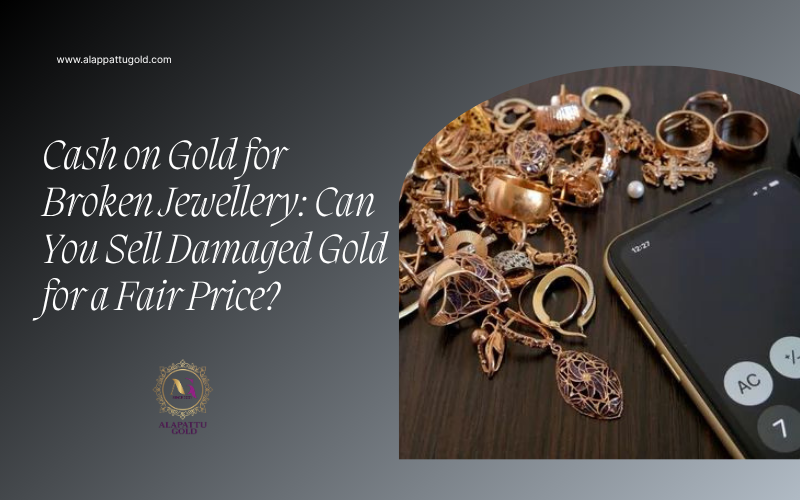
Broken jewellery may look useless, but it can still contain valuable gold. If you have a damaged chain, bent bangle, single earring, broken ring, or outdated ornament at home, cash on gold can help you turn that unused item into immediate financial value. The final amount depends not on the appearance of the jewellery, but on its purity, net gold weight, current market rate, and the buyer’s valuation process.
This guide explains how broken jewellery is evaluated, what affects its value, and how to sell it safely in Kerala.
Can You Sell Broken Gold Jewellery?
Yes, broken gold jewellery can generally be sold to a professional gold buyer. Gold does not lose its basic value simply because an ornament is damaged. Whether the item is wearable or not, its gold content can still be tested and valued.
Common damaged items that buyers may accept include:
- Broken gold chains
- Bent or damaged bangles
- Single earrings
- Broken rings
- Old pendants
- Jewellery with missing clasps
- Outdated necklaces
- Damaged bracelets
- Incomplete jewellery sets
- Gold items with loose or missing stones
For example, a chain may break into two pieces, but the gold in those pieces remains valuable. A single earring may no longer be useful as jewellery, but it can still be evaluated based on its purity and weight.
However, the item must be genuine gold or contain a measurable quantity of gold. Gold-plated, gold-coloured, or imitation jewellery will not receive the same valuation as solid gold.
How Cash on Gold for Broken Jewellery Is Calculated
The value of damaged jewellery is usually calculated through a few important steps.
1. Initial Inspection
The buyer first examines the item to identify hallmarks, karat markings, repairs, stones, enamel, springs, hooks, beads, or other materials. The inspection helps determine whether the jewellery is likely to be solid gold and what type of testing may be required.
2. Weighing the Jewellery
The complete ornament is weighed on a calibrated scale. This is called the gross weight. It may include gold as well as stones, lac, pearls, beads, thread, or other non-gold materials.
3. Determining Net Gold Weight
After identifying non-gold components, the buyer estimates the net gold weight. This is the portion used for gold valuation.
For example:
- Gross weight of broken necklace: 18 grams
- Weight of stones and other materials: 2 grams
- Net gold weight: 16 grams
The calculation should be based on the 16 grams of gold rather than the full 18 grams.
4. Purity Testing
The jewellery is tested to determine its purity. Common levels include 22K, 18K, and 14K. A 22K ornament generally contains more gold than an 18K ornament of the same weight, so the purity result affects the final amount.
5. Applying the Current Rate
The applicable gold rate for the relevant purity is used to calculate the estimated value. Any deductions should be explained clearly before the transaction is completed.
Factors That Affect Cash on Gold Value
Several factors influence the amount you may receive for broken jewellery.
Gold Purity
Purity is one of the most important factors. A 22K chain and an 18K chain with the same net weight will usually have different values because their gold content is different.
Net Weight
The buyer generally calculates the value using the weight of the actual gold. Stones, beads, lac, enamel, and other non-gold parts may be excluded.
Current Market Rate
Gold prices change regularly. The rate used on the day of evaluation may affect the final offer. Always ask which rate is being applied and whether it is for 22K, 24K, or another purity.
Stones and Decorative Materials
Broken jewellery may still contain gemstones, diamonds, pearls, or decorative elements. In many old-gold transactions, these materials are separated from the gold calculation. If a stone has independent value, ask whether it will be assessed separately.
Repairs and Mixed Components
Older jewellery may contain soldered sections or parts made from different metals. These can influence the testing result and final valuation.
Buyer’s Policy
Different buyers may follow different processes for testing, refining, deductions, and payment. Compare complete offers rather than choosing a buyer based only on an advertised rate.
Example: Estimating the Value of a Broken Chain
Suppose you have a broken chain with these details:
- Gross weight: 20 grams
- Non-gold components: 1 gram
- Net gold weight: 19 grams
- Purity: 22K
- Approximate purity factor: 0.916
Estimated pure-gold content:
19 × 0.916 = 17.404 grams
The buyer may calculate the value using the applicable 22K rate or by converting the result to pure-gold value. This example is for understanding only. The actual payment depends on the day’s rate, test result, buyer’s calculation method, and any clearly explained deductions.
Do not expect a household weighing scale to provide an accurate estimate. Even a small stone or filling can change the net weight.
How to Get a Fair Cash on Gold Offer
Selling damaged jewellery does not mean you must accept an unclear or rushed offer. The following steps can help you receive a fair valuation.
Check the Approximate Gold Rate
Before visiting a buyer, check the current market rate from a reliable source. This gives you a general reference point.
Separate Sentimental Items
Review your jewellery carefully before selling. A broken item may still be a family heirloom or have emotional importance. Once sold, it may not be possible to recover the same ornament.
Ask for a Complete Breakdown
Request details about:
- Gross weight
- Non-gold weight
- Net gold weight
- Purity
- Rate per gram
- Deductions
- Final payment
A professional buyer should be willing to explain each part.
Observe the Testing Process
Ask how the purity will be tested. The process should be handled carefully and professionally. You should feel comfortable asking questions throughout the evaluation.
Compare Transparent Offers
You may compare offers from more than one established buyer, especially when selling a high-value item. However, compare the entire calculation, not just the quoted per-gram rate.
Confirm Payment and Receipt
Before leaving, confirm that the payment has been received. Ask for a receipt or written transaction record for your files.
What Documents May Be Required?
Requirements can vary depending on the buyer and transaction value. It is useful to carry:
- Government-issued photo identification
- PAN card, where applicable
- Original purchase bill, if available
- Address details
- Bank account information for electronic payment
- Ownership or inheritance documents, if relevant
The absence of an original bill does not always prevent evaluation, but identity and ownership verification may still be necessary.
If the jewellery belongs to another person or is jointly owned, obtain proper permission before selling it.
Is It Safe to Sell Broken Jewellery?
Selling broken gold can be safe when you choose an established and transparent buyer. Look for a professional business location, clear contact details, proper weighing equipment, straightforward communication, and secure payment options.
Avoid making a decision based only on claims such as “highest price” or “instant payment.” Ask how the offer was calculated and whether any deductions apply.
Keep your receipt, payment confirmation, and valuation details safely. If you need assistance regarding old-gold evaluation, you can contact Alappattu Gold on WhatsApp.
For more information about related gold-buying services, visit the complete guide to selling old gold safely in Kerala.
Frequently Asked Questions
Can I sell a single gold earring?
Yes. A single earring can be evaluated based on its purity and net gold weight.
Does broken jewellery receive a lower gold rate?
Damage itself may not reduce the gold content. The final value depends mainly on purity, weight, market rate, and applicable deductions.
Are stones included in the weight?
The total jewellery may first be weighed, but stones and other non-gold materials are usually excluded when calculating gold value.
Can old-fashioned jewellery be sold?
Yes. The design or age of an ornament usually does not prevent it from being evaluated.
Should I repair jewellery before selling it?
Usually, repairing an item only for selling may not be necessary. Ask the buyer whether repair is relevant to the valuation before spending money.
Conclusion
Broken jewellery is not necessarily worthless. Chains, rings, bangles, earrings, and other damaged ornaments may still provide meaningful financial value when evaluated correctly. The most important factors are purity, net gold weight, the current market rate, non-gold components, and the transparency of the buyer.
Before selling, check the approximate rate, understand the valuation process, ask for a complete calculation, compare trustworthy buyers, and retain your transaction records. Most importantly, consider the sentimental value of family jewellery before making a final decision.
With the right information and a reliable buyer, you can sell damaged gold confidently and receive a fair, transparent payment in Kerala.